Letter from Croatia and Across the Seas
- Tin Belinic

- Apr 5
- 13 min read
Updated: Apr 6

Soon after I started high school in my hometown of Zagreb, Croatia, my father asked me to start thinking about whether I wanted to stay in Croatia or study abroad when I graduated.
We agreed that by the end of my second year, I would come to a decision. Maybe I was becoming disillusioned with the opportunities in Croatia, or maybe I didn’t want to chase stability and comfort. I needed to see something new.
I am a dual citizen of Croatia and Canada, so I knew the direction I would take when I decided to start making my journey into the unknown. I don’t think my father was surprised by my decision.
I arrived in Fredericton, New Brunswick, on August 27, 2023, and moved into what would be my home for the next year: a compact dorm room on the campus of St. Thomas University. I looked out my window and watched students gathering on the small white benches under sunshade umbrellas in the large green courtyard below.
Summer was reaching its end, and I was preparing for a transformation of my own.
It was the first time I had been on my own, and as the only Croatian on the small campus, I had to adjust. Those first few weeks went by fast, and soon I made friends with a Swedish exchange student named Ara Maarouf.
He was short, his face smooth and rounded with a dark beard and long, dark, almost silky hair that trickled down to his shoulders. His brown eyes were mesmerizing and his brow full; he had all the physical characteristics of a Kurd but the honest, easy-going, and open-mindedness of a second-generation Swede, as his family moved to Gothenburg before he was born in the 1990s.
Ara was and still is one of the most important friends I made at university; he was the first friend I made, and through the years, our friendship has only grown stronger despite now being an ocean apart.
Early in that first semester, Ara and I went to watch our first university soccer game, and as we walked up the bleachers, he told me he wanted to introduce me to someone.
“Hey, man, what’s up?” the man had said, extending his hand.
“Nice to meet you. I’m Tin,” I said as we shook hands.
“I’m Mariano,” he said, smiling.
And just like that, I had another friend. The three of us were together day in and day out, night after night, hanging out at Mariano’s old house on the edge of the campus, going downtown or to the campus pub called “The Cellar.” Thanks to them, Fredericton became my new home and my friends a family.

When Mariano was going into his fourth year, he was looking for a new place to live off campus. I was still deciding whether I would stay on campus or move out of the dorms. One night in January, we were making our way back to campus from downtown, traversing the black ice-infested roads and sidewalks, the ice cracking beneath our feet and our breath curling around us like smoke in the freezing cold. It was then that he told me we should find a house and move in together. Without any hesitation, I said, “Yeah, that’d be awesome.”
Born and raised in Toluca, the state capital of the State of Mexico, Mariano first came to Canada on what was supposed to be a brief exchange in 2021, but he fell in love with both the country and its people and enrolled at St. Thomas University.
Mariano has wide shoulders and a stocky build; his complexion is naturally pale, his short brown hair always neatly combed, and stubble spreads across his rugged face. He is naturally charming, open-hearted, and a hard worker. He brought the warm spirit of Mexico, a deep sense of humour, and a relentless approach to life to Canada.
At the time, he thought he had found a new home. What neither of us knew when we moved in together was that Mariano’s time in Canada was coming to an end.
I’ve been thinking a lot about Mariano lately, and about my own journey, and about my family, piecing together the story of how they came to Canada as part of the great Croatian diaspora more than half a century ago.
My grandparents arrived in Canada believing that hard work and sacrifice would get them somewhere, and it did. The doors Canada opened for them took my family all over the world before they returned to Croatia in 1985, and now, as they have grown older, they have only beautiful memories of their time abroad.
Mariano believed that if he worked hard enough, if he was willing to put in the work, effort, and sacrifice, he could stay and make a new life. What I know now is that the landscape of opportunity has changed. But I am getting ahead of myself.
First, I have to go back to the summer of 1966, when my grandfather Slobodan Marko Belinić was twenty-one years old and living in a communist-ruled Croatia, back when it was part of the Socialist Federal Republic of Yugoslavia.

His shoulders were wide, his face always shaved, and his short dark hair slicked to the sides, taming his wild cowlick. His rugged features were akin to those of Marcello Mastroianni. He was the son of a prominent politician, Marko Bartolov Belinić, a well-respected figure in the communist party who had a close friendship with Yugoslavia’s president, Josip Broz Tito.
After graduating from technical school, doing a brief stint of mandatory service in the army, and working various jobs around Zagreb, he could not help but feel directionless for a couple of years due to his dissatisfaction with the country’s economic and political state. As for many young men of his age, the idea of leaving crossed his mind.
At the time, he was living in a house right next to the local Zagreb landmark of Šalata, located on the slopes of Medvednica and just above Vlaška street, which served as the main hangout spot in town during the summers where everyone went to cool off in the scorching summers.
Slobodan and some of his football buddies at the time were hanging around the pool, aimless, just trying to cool down and relax. That was when he first laid eyes on my grandmother, Zdenka. She was about eighteen with a slim build and luscious, blonde hair; she used to model for local magazines and commercials and was always compared to Catherine Deneuve, a compliment she holds in high regard to this day.
Her father worked as a ticket salesman at all the local sporting events, from handball to football to hockey. She was always around the area as a result. They immediately fell for each other, spending the whole day together, which culminated in a moment of heated passion, meaning my grandmother had gotten pregnant on their very first encounter. They got married a couple of months later.

After their daughter, my aunt Deana, was born, they struggled to make a living and were scraping by with support from family members. Slobodan was making little to no money as an electrician, Zdenka was unemployed, and, as struggling young parents, they had trouble finding a place to stay.
A plan for a new beginning came from Slobodan’s uncle, Ante Budak, a living encyclopedia, a man who knew Webster’s dictionary like the back of his own hand. He was living in Edmonton, Canada, at the time and had arrived in Croatia for a visit.

“We talked about life in Canada,” Slobodan remembered. “He was willing to be our guarantor during the process of gaining an entry visa. We were hesitant, but the Canadian dream got to us.”
With nothing left to lose, they took him up on the offer and decided to move to Edmonton, where they would stay with his uncle until they were able to get on their feet.
My grandparents believed in a better tomorrow, that through hard work, sheer willingness to adapt, and faith, they could create a happier life for their growing family.
After a year of waiting, they received their entry visa in 1969 and moved to Edmonton. Upon arrival, the hardest challenge was learning English, but the Canadian government offered places in a six-month English learning school, something they found to be their greatest help during the adjustment period. My grandfather enrolled in the Northern Alberta Institute of Technology.
Balancing school with a part-time job as a butcher proved stressful; along with that, my grandmother worked odd jobs and as a window cleaner. With no one to look after their daughter, she would bring her along. Despite the challenges and the unavoidable doubt, they pushed onwards with one guiding phrase in mind, “trbuhom za kruhom,” in search of a belly full of bread.
“It meant to go out of your way, out of your country, and to embrace the discomfort of the unknown, to search for a better tomorrow,” my grandfather said. “It meant to shed your blood, sweat, and tears to be able to put food on the table.”
Eventually, their efforts paid off. My grandfather finished school, they were able to buy a house, and he worked for various companies before his big break at a company called Challenger Limited, an onshore and offshore contract oil and gas drilling company.
They had two more children, my father, Markoantonio, and my aunt Kristina. But all that success came with a cost that put a strain on family life, and that was the cost of time.
To support his wife and children, my grandfather’s position had him travelling all over the world, from Canada to the United States, the Middle East, and Africa on oil and gas rigs, where he worked on installing, maintaining, and repairing control systems. He would be away for up to four or five months at a time, missing out on seeing his children grow and being absent as both a father and a husband.

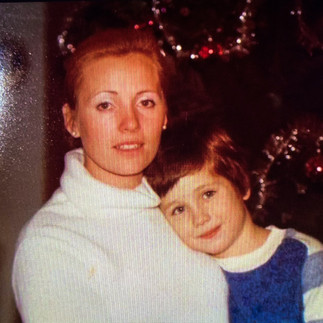


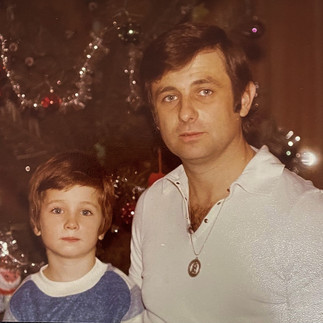
“Leaving for Canada, we met a new world, one that gave us a new perspective. But it came at the cost of being separated; it was a sacrifice both my husband and I shared to ensure a safe future for our children,” recalled my grandmother, “That’s the difference between when we were younger and today’s generations. We had patience, while generations today are in a rush. It was hard, and I missed my husband.”
My father, Markoantonio Stjepan Belinić, was born in Edmonton, Alberta, in 1973. His childhood was full of stability and opportunity, white picket fences and all.
“There was more freedom in how you could live your life without looking over your shoulder. There was less crime, less poverty. It allowed us as kids to freely wander around and be Tom Sawyers,” he said.
Canada gave my father life, both physically and spiritually, as it was here where he fell in love with his lifelong passion and devotion to ice hockey, which later on in life opened numerous doors in the profession and allowed him to establish a hockey franchise in Croatia, meeting players such as Jarri Kurri, Wayne Gretzky, and Paul Coffey, all of whom he grew up admiring as a child during the great Oilers dynasty.

But as he grew older and travelled throughout Canada between 2006 and 2019, frequently for scouting opportunities and work in general, he couldn’t help but notice changes. The Canada of his youth, full of fairness and opportunity, was slipping away.
“I think that mass globalization has made drastic changes,” my father mentioned. “Hard work is valued, but it’s not rewarded as it once was. Unfortunately, people have become cogs in the machine, and Canada isn’t the land of opportunity that it once was.”
For my older brother, Marko Ivan, however, Canada was always a home away from home. As a dual citizen growing up in the presence of Canadian hockey players, coaches, and stories from our grandparents, aunts, and father, he always felt a connection and pull toward the Great White North.
By his senior year of high school, he had already made up his mind, and the decision felt natural. Following the guiding principle of our grandparents, in the search for a belly full of bread, he believed he would find limitless opportunities, that just as it was the land of opportunity for our grandparents before us, so it would be for him as well.
“I always said I am Croatian-Canadian. People wanted to correct me, but my ties to both countries were strong,” he said. “Canada felt like home.”
At the time, Canada was doing strong politically and economically, which only further strengthened Marko’s resolve to move to his second home; combined with great education at a great price and the prospects of new opportunities and adventure, it was an easy choice to make.
In September of 2019, his dream came true as he arrived in Toronto to study political science and history at the University of Toronto. But the expectations he had had begun to change rapidly; the COVID-19 pandemic hit near the end of the first year, businesses were closing, and the costs of living were rising.
Marko couldn’t help but feel a sense of disconnect; people were becoming colder, and everyone was either stressed or divided on what was going on in the world.
Still, he remained hopeful for the time being, believing that things would look up sooner than later. Then, Russia began a full-scale invasion of Ukraine on February 24, 2022; the year also marked Marko’s final year of undergraduate studies.

As he was reaching the end of his studies, the future looked bleak.
He had considered law school, but the financial costs outweighed the benefits of pursuing law and did not align with his goals in life. He was searching for job opportunities in the sports industry, but there were only internship options available. With the rising costs in Toronto, it would not be enough to provide him with the necessary funds for housing and food.
Meanwhile, he believed the political arena was no better. Despite majoring in political science and history, he lacked connections in the field, and with no knowledge of French, he found opportunities to be limited; the only options available were short-term internships.
There was a sense that he and his generation were being asked to do more for less. There was a constant demand to work longer hours and always be present and available for any late notice because of emails, phones, texts, and the overall pressure to be constantly online.
“With a crisis in identity in Canada and myself, inflation, rising unemployment, and skyrocketing prices, as well as Canada being politically and socially divided, I felt like any opportunity for the amount of work I put in to graduate early and find a good job to stay was nonexistent in the end.”
It turned into a bittersweet ending as he chose to return to Croatia, where his former partner was living at the time, and his plan was to be where she was for the time being until they both figured out their next moves.
Croatia made more sense as well, due to having minimum living costs by living at home and working while developing his resume, than to, according to Marko, work in Canada to just make ends meet while hoping someone would give him a chance to prove himself.
“I was more interesting as a returnee due to my education and experiences to companies in Croatia than I was in Canada. So, in an ironic twist of fate, Canada gave the base, but Croatia became the land of more opportunities in comparison.”
I scroll through my contacts on WhatsApp to find the profile picture of Mariano; it was captured on the day of his graduation, May 13, 2025. He is smiling proudly, holding his diploma in one hand, while the other is extended, palm up, as he approaches his father. I can see the joy on both their faces.

That morning, he put on his dark suit, scrambled to the mirror of our basement unit home, and watched a YouTube tutorial on how to adjust his blue tie. He sat proudly during the ceremony, and, in that moment, the future looked bright and filled with endless opportunities.
This was it; it was the happiest I have ever seen him. Mariano was accepted as a tree planter over the summer and would work for a couple of months before planning out his next move. There was only one problem: his study permit had expired a couple of weeks before graduation.
When Mariano’s study permit expired in the last week of April, he immediately applied for the PGWP application as soon as the university gave him all of his papers.
The PGPW, or “The Post-Graduation Work Permit,” is what allows all international graduates to stay and work legally in Canada. But Mariano couldn’t start his position as a tree planter without the permit and remained jobless, scrambling to make ends meet with what little money he had left in the hopes that the government would reach back to him sooner than later regarding the status of his work permit application.
A couple of days of waiting turned into a couple of weeks, and a couple of weeks turned into two months of agonizing anxiety.
Each day, he would refresh his e-mails only to find nothing new. Everything turned upside down, and his expectations of postgraduate life and pursuits in Canada dwindled.
Mariano had the support of his family back in Mexico, but ultimately, his rightfully worried father gave him a dose of reality: wait one more month and hope things work out; if not, come home.
Mariano did everything right; he went through the proper channels. He enrolled in school, he paid his dues, and he held onto the belief that if you do things the right and hard way, if you follow the rules, you will be rewarded. But the permit never arrived, and with a lack of options and help from the IRCC (Immigration, Refugees, and Citizenship Canada), he made the decision to move back home.
He sold his car, clothes, and furniture. What couldn’t pass through the airport was posted online on Facebook Marketplace, and what was left of his adult life up until that point was reduced to a couple of packed bags.
The journey of Mariano and my family had me thinking about my own journey to Canada and my future. It has offered me opportunities and chances I would never have had if I had stayed back in Croatia.

I left my home an optimistic dreamer fueled by the stories of my grandparents, but lately I have come to realize that the Canada of their time and the Canada of mine are two separate things. I am both Croatian and Canadian, and at times I am neither.
I’m going to take the time to figure out what that means.
I stare at Mariano’s profile picture on WhatsApp and finally dial his number. He picks up, and I am greeted by his cheery face over FaceTime. I haven’t seen him in over five months, ever since July, when he boarded a flight back to Mexico, angry and disappointed.
Seven months later, the letter from the IRCC had arrived, rejecting his application because he was no longer in Canada. He closed one chapter and started a new one, working for his father.
“Fortunately for me, I have a job, my family, and friends and live a very comfortable life in my country, but I feel like a lot of immigrants don’t, and they only have one opportunity to move to a country like Canada. I can’t imagine all the people who were in the same situation as I was, but they don’t have the same opportunities as me in their home country.”
Our call abruptly ends when his phone dies, and I am stuck staring at a picture of his frozen face for a moment too long. Finally, the screen goes dark, and silence fills the room.


Comments