Surrounded by Stuff and Trying to Climb Out
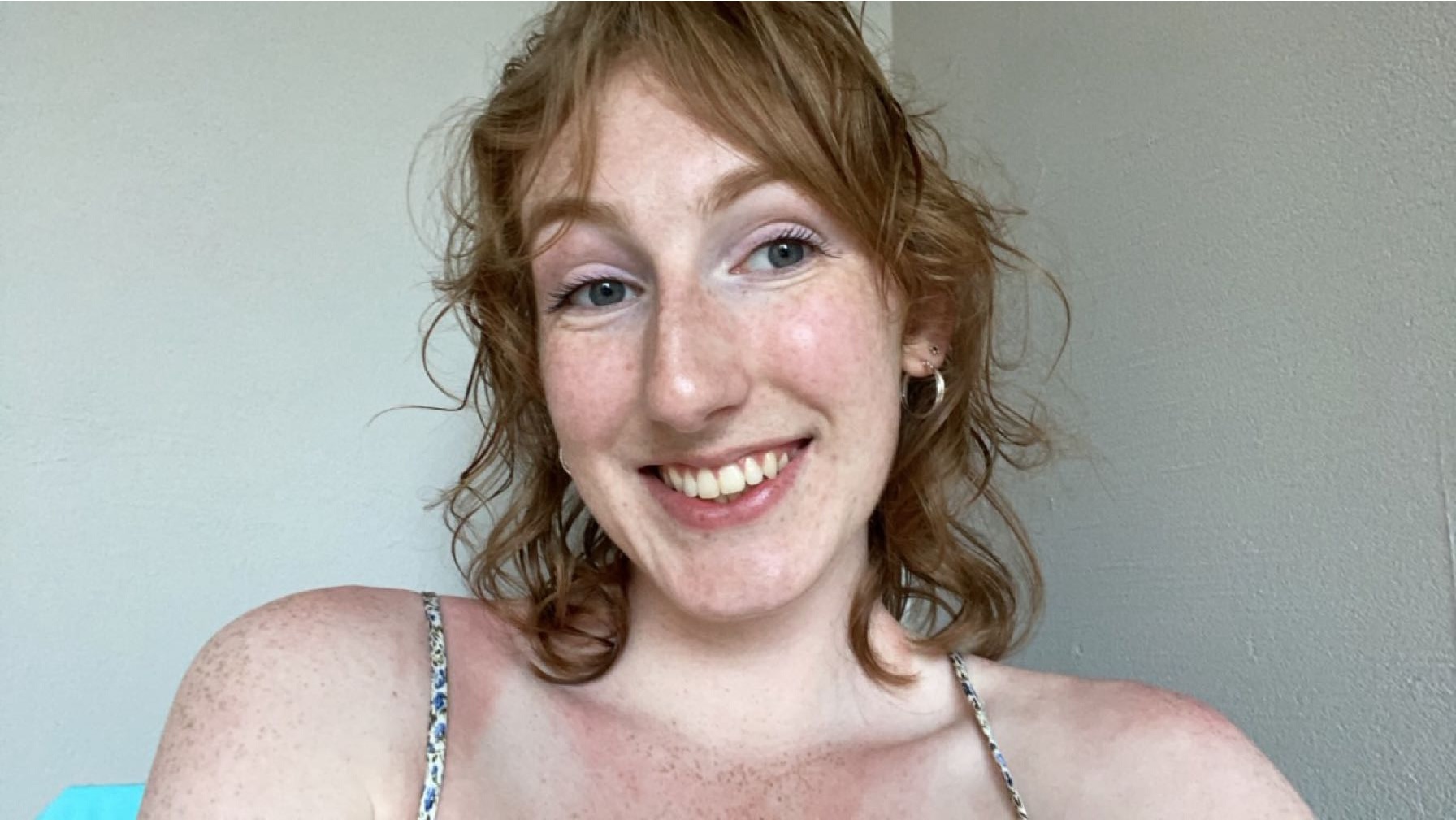

Big changes start small. The summer before my second year of university, I was volunteering at a local thrift store in my hometown, Clarenville, a small town of seven thousand people.
I was put into the sorting department downstairs. We had to bring the bags of donations in and sort through them to find things we could sell. Simple enough, it was easy work.
Rip open the giant black plastic bag and sort through for articles of clothing that are fit to be sold again. Jeans with no stains and still had a nice fit, and shirts with no holes and still stylish enough for someone to want them.
On my second day, I walked in and looked at the pile of donations we had to sort through. The wooden pallet for the bags was not even visible. What I saw was something that appears in the corner of your eyes at night. A giant black mass, bulging, taking up at least a quarter of the room. Never had I seen such an accumulation of things: jeans, shirts, scarves, jackets, gloves, hats, never-ending.
I realized that everything I had ever owned still exists somewhere in the world. Donating it does not cease it to be a problem. It still exists, most likely in a landfill, or somewhere strewn across a tree or in the ocean.
That day, I knew a change had to be made, for myself and the world around me. So, I began thinking about how I became part of the problem of stuff. Stuff, we're surrounded by it—our rooms, kitchens, and living rooms. Stuff lines the shelves, cabinets, dressers, and tables.
We are drowning in stuff. Things we don’t need, things we think we need but really don’t, and then the things we do use are hidden among it all. Why do we buy so many things we don’t really need?
Let's start from the beginning, to what shaped my young mind as a child to think that consuming made me something or someone. Growing up, I watched shows from Disney Channel like The Suite Life of Zack and Cody, Hannah Montana, and Girl Meets World. These shows were catered to young preteen girls, with their humour, relatability, and aspirational images of life.
They would show the young girls watching that having issues with friends and family, or troubles at school, were just a part of life, and they would always be resolved. However, how these problems were solved, or how they made themselves feel better. Or just showing that they were the “it” girl. It would more than likely be tied to a shopping spree, a beauty transformation or going out just to spend money.
This pattern repeated itself in almost every show. You're getting made fun of at school
because of how you look? Go out for a shopping spree and makeover with your friends at the mall. Feeling upset about a breakup? Get a smoothie and buy something new to make yourself feel better. Feeling like you're lacking in the latest trend and you're not staying relevant? Go out and get it! Buying new clothes, makeovers, and having access to buy new things was made to look like a necessity of girlhood. It made you something, cultivated your image.
Consuming meant being something, like being the “it” girl, or the person who had it all together. This idea was ingrained into my brain that consuming meant relevancy, social status, and participation in the idealized girlhood sold in the media.
This mindset carried with me into my young teenage years. This time, however, I had
access to money, freedom, and social media. I remember the first “shopping spree” I went on. It was my thirteenth birthday, and my mother and I took a trip to the city so we could go to the mall and go out to eat at a nice restaurant.
At the mall, I was allowed to buy my first two pairs of real jeans. This meant going into the American Eagle store, somewhere I had idolized as a young girl. I browsed the endless piles of denim, looking at every cut and style. Gazing at the pictures of the models on the walls, seeing how well they wore them, how confident they looked. After countless laps around the store to ensure I had looked and touched everything, a fitting room fashion show was put on for my lovely mother.
I finally picked out two pairs, one was a dark wash jean, with rips in the knees, the white fray hanging at the sides. The other, a high-rise light-wash jean, with white fraying
starting at the knees and going to my mid-thigh. I thought they were the coolest jeans ever, and the best part was that along with these jeans, I got to browse the rest of the mall to find two new shirts to go with them, and that I did. In two different stores, I can't even remember the names of.
I found a blue and white tie-died crop top, and a magenta t-shirt that tied up in the front, so a little knot hung at my belt line. I was totally revamped, as I even got to buy my first bit of makeup as well, a tube of mascara, eyeshadow, and blush.
At the time, I felt that this was the best experience ever, and I still hold positive feelings
about it to this day. I felt like I was finally experiencing girlhood just like in the shows I had watched when I was younger. I was able to go out, buy new, more grown-up clothes, and buy a little bit of makeup.
I was going to come back to school transformed, a new, better version of myself. All from the new clothes that I had bought, and the makeup I was now allowed to wear, were the pieces I needed to make it happen. I rode that high for weeks. I had the latest trends, and I was now finally keeping up with the rest of the girls in my class.
However, in a consumerist culture, things never really stay relevant for very long. Trends and fads are what keep the cycle pumping, and us consuming. So, now with my newfound social media access, I was exposed to this constant web and flow of trying to keep up with the next “Best thing.”
I quickly discovered that the jeans I bought were now out of style, and the makeup I had gotten was now not the “Best thing.” This also showed through my peers as well, who were also exposed to very similar materials as I was throughout their lives. They came into school now wearing the latest trending clothing, and the next best item to have in their personal collection of things.
This pattern continued for years. You try to keep up, but you come to find later that what you have is not the best, and there’s something out there bigger and better. Social media, like Instagram, Snapchat, and TikTok, were top performers in enabling this behaviour. Stars, like Kylie Jenner, who sold young girls her Kylie lip kits to make their lips look bigger and better. Made the makeup you had not very good anymore. Or influencers that would come onto your feed, showing you what just came out of the production line at American Eagle or Urban Planet, jeans that were now better, shirts cuter, more in style.
Now, the clothes sitting in your closet are out of fashion.
Constantly being fed faces excited to show you their new things and how they made them better, prettier, and more successful. It made being a young, impressionable girl quite difficult. Keeping up felt like a never-ending task, but the desire to be the “it” girl, the girl who had it all, was an over-consuming feeling, and it felt almost necessary.
Through this constant state of consuming endless cycles of new things, I would eventually see some light. In the sense that I was developing an awareness of the natural world around me. I had always enjoyed being out in nature, and I grew up around it. But I was never really exposed to pollution or the effects of our consumption littering the world around me. That was until I snuck down to the coastline near my home.
It was a beach, with jagged-edged rocks lining the path, the ocean waves creeping up close, sometimes splashing up against them. As I walked across the rocky path, I noticed small pieces of plastic lining the shoreline. Travelling further, more stuff started to appear. Shoes floated in the water, t-shirts lay strewn across the rocks, and random pieces of cloth intertwined with seaweed. It was a horrific sight. I had never seen anything like it before. It was simply so much stuff.
I recognized where some of the shirts came from as well. I had seen them in stores just a couple of months prior. So, I kept walking out of curiosity, my pathway becoming less stable and reliable to walk on. But I had to see how far this went. But it didn’t stop. As far as I could see from the end of my path, there were still endless items floating in the water.
This experience led me down a pathway of discovery and denial. I began to become
aware of what kind of world I lived in. I began watching documentaries about where my clothes came from, what the process was to make them, and who made them. One of the most pinnacle pieces I watched was in my final year of high school for an entrepreneurship class. It was a documentary done by the Fifth Estate on CBC, called "Made in Bangladesh."
It dove into the horrors that fast fashion creates. The documentary's main focus was to showcase the deplorable conditions in which people work in clothing factories in Bangladesh.
They face long hours in non-ventilated rooms, are victims of physical and mental violence, and are at constant risk of structural failure in the buildings they are in, which has led to mass death and casualties.
This is all driven by the constant demand from the West. We demand more new things, faster, and cheaper. Creating a system where the factory owners use their power against their workers to churn out more profit for themselves, and to please the West's demand for new clothes. At the end of watching the documentary, the teacher had an activity.
We had to check the tags on the backs of our clothes to see where they were made. Lo and behold, a majority of the classroom, and I had a Made in Bangladesh logo printed on the back. The room felt still. We had all just seen the misery and suffering of the workers in Bangladesh, and here we were sitting in privilege, where we get to just wear the clothes.
Undergoing this drove me down the rabbit hole further. I looked at landfills around the globe, containing piles upon piles of clothes. Which now makes sense, as 92 million tons of clothes globally are committed to the landfill each year, coming from Earth.Org. On top of this, clothes today are made of mostly synthetic materials, such as polyester, nylon, acrylic, and spandex. These materials shed microplastics while in the landfill, when you wear them, and contribute to microplastics in our oceans.
I lived with guilt and denial. How is all this possible? Why have we created this system?
My most pining question, however, was, have I contributed to all of this? I wanted the answer to be no. There was no way I was a contributor; this problem is so big, and I am so small. How could I have done anything?
After my summer experience at the thrift store, I decided that my consumption was poisoning the world around me. The forests I valued, the oceans I treasured, the air I took into my lungs. All are impacted by my decisions to consume things.
So, I began making changes. I now make different decisions. I don’t fill my mind
endlessly with the media telling me to buy new things. If I see someone on my Instagram talking about the new clothes they bought, or the newest release in a cosmetic line, I simply scroll past, I don’t engage, and I don’t go looking for it in stores later either. Walking around the mall or window shopping along a street is no longer a pastime either.
Buying second-hand is my priority now. Going to a thrift store and looking for what I need is so exciting. Looking through each rack one by one, knowing every piece is going to be different. Unlike chain stores, where everything is methodically organized and categorized. Then finding a piece among it all, sometimes popping out at you like it was waiting for you to come by. Trying it on and it being perfect, and knowing that with this purchase, it will be one less item in demand, and one less thing in the landfill.
We are defined more than just by the things we own and consume.
Our image is who we present ourselves as, not by how we look. We are somebody; there is no need to compete to be something or someone better.
So, stop. Slow down. Be mindful of your intake, because everything you’ve owned, or ever saw in a store, is still out there, somewhere, going nowhere.


Comments