The Other Side of Grief
About two months after my mom passed at the age of 41, I travelled from my home in Elsipogtog to the state of Massachusetts on a whim. What started as a Google search for the closest Raising Cane's turned into a spontaneous road trip with my boyfriend Jacob. After an eight-hour car ride, we arrived just outside Boston and ordered an Uber into the city.
I felt a new energy as we crossed the Zakim Bridge. Jacob, who had driven all day, had his eyes glued to the window; we were worlds away from New Brunswick. We passed towering skyscrapers and charming stone townhouses. Everything was completely new and hypnotizing. The rolled-down passenger side window let in the August nighttime air. White Flag by Dido played on the radio, I listened to the lyrics “I won't put my hands up and surrender, there will be no white flag above my door.” I didn’t want to surrender. There was still life to be lived.
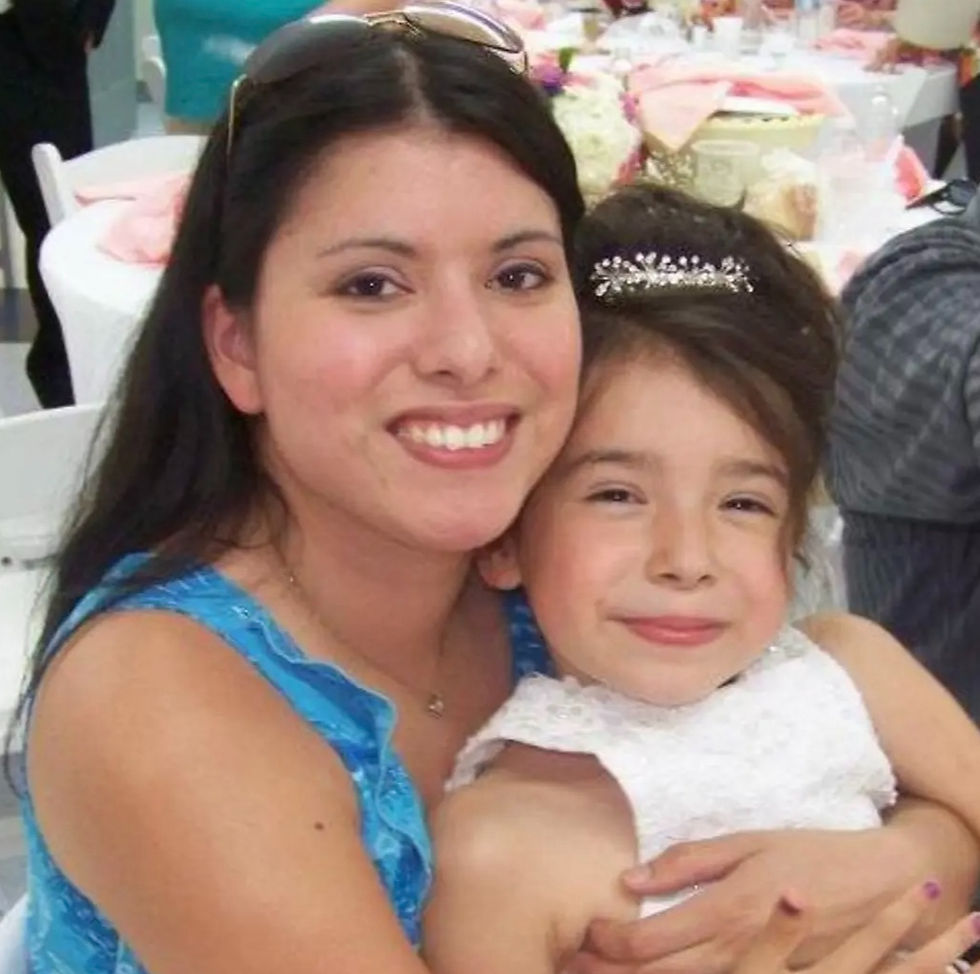
My mom’s name is Mimiges, which means butterfly in Mi’kmaq. Like her namesake, she was graceful and beautiful. She had golden tan skin, perfectly white teeth, long black hair, and a contagious, toothy smile that made me feel like everything was going to be okay. She always knew when I was upset, when I tried to pretend I wasn’t, when I’d break down in tears as soon as she asked, “What’s wrong?” Growing up, I’d watch her put on her makeup in the bathroom mirror and dream about growing up to be just like her.
For most of my childhood, it was just my mom and me. There were boyfriends, work trips, and weekends I spent at my dad’s house, but the core of my life was the daily routine we shared. From the ages of 7 to 14, we lived in Miramichi , about an hour away from Elsipogtog, where we’re from. Sometimes I got lonely living away from everyone, but I truly enjoyed the time I spent with my mom. Our favourite thing to do in the evening was to go for a drive and talk about our day at school and work. One day, we were at Walmart, and she noticed a Michael Jackson CD by the cash register. “I’m tired of my music,” she said, passing the CD to the cashier. She bought thousands of songs on iTunes back in the day and refused to pay for a streaming service, so she bought that CD and played it a million times over, enough for me to get sick of it, and then eventually enjoy it again. Sometimes I played my music in the car, and she pretended to enjoy the shrieking melodramatic vocals of My Chemical Romance.
Over the years, my mom began struggling with her health, and she had to sell the house. She began living with my grandmother, and I slowly started living with my dad.
Then it was the summer of 2024. It was a sweltering sunny day, I was nineteen, and I had just started working as a bartender. It was my second day of training when my mom was taken away by an ambulance. I was mopping floors and scrubbing the toilets while my phone blew up with text messages. Initially, I was concerned but not scared. My mom had gone to the hospital many times before, and she usually came home in a few days. It wasn’t until I walked into her hospital room that the gravity of the situation hit me. She was unresponsive. The doctor said her liver was failing. All I could do was hold her swollen hand and wonder if we’d ever speak again.
Then one day when I walked in her eyes lit up and she said, “you remind me of my daughter.” “I am your daughter,” I said pretending my heart wasn’t breaking. Then she looked at my dad, who came with me that day, and told him, “You look like Francis.” “I am Francis,” he responded in a cheerful tone. My mom smiled, but I stood there helplessly trying to fight back tears. My dad reached out his hand and placed it on my shoulder.
Then she asked him, “How are your children?” My dad seemed startled by the question at first, but then started talking about my five half-siblings. I was surprised to see my mom nodding and listening enthusiastically. My mom mentioned the one time she met my brother Watson, years ago , when he was four years old, and wreaked havoc at my birthday party. “He only listens to his big sister,” my dad said, and the two shared a laugh for the first time in years.
They reminisced about student life in Fredericton when they were young and still together, the clubs they had gone to, and the Chinese buffet at the Diplomat. Then it was our turn, and we talked about all our best memories, like our trip to Florida, and the best wings we ever had. We had arrived at the Coco Key resort around midnight. We hadn’t eaten all day, so she picked up the hotel phone and ordered hot wings, a cheese pizza, and Fanta. The cheese pizza was bland, but the wings were perfectly flavourful; they were hot but not too hot, and they came with a well-made blue cheese sauce. She couldn’t remember where she ordered from, so we ordered wings three more times on our trip, trying to find them again. We had told that story a million times, to other people, but it was the first time my dad heard it.
“You know what would be good right now?” my mom began, “ice cream.” Then she asked if I remembered going to Richie’s Warf to get ice cream on the boardwalk. “We should go again," she said with a deep breath. “We should,” I agreed and silently prayed that we would get to return to Richie's Warf, travel the world, and track down the world's best wings.
I was at work, surrounded by cases of hard liquor and beer in the bars' storage room , when my grandmother told me that the doctors said my mom would pass away over the weekend. My mom spent most of the weekend in morphine-induced sleep. When she’d wake, she’d become restless, and we’d have to stop her from pulling out her IV and trying to get out of bed.
Sometimes she groaned, “I want to go home.” She started saying it before we knew she was dying, and I told her she would go home soon. Now that it wasn’t true, I didn’t know what to say. She knew she was dying and believed that if only she could leave the room, she could escape it. I imagined giving it a try, rushing her out of her room, away from the hospital, and from what was happening.
Saturday came and went, so did Sunday, and then it was Monday, and even though we had just moved her things to palliative care, I thought maybe we’d have more time. However, during that visit, I struggled to sit still. My mom slept heavily and hadn’t said anything all day. I had this inexplicable urge to leave, so when my grandmother wanted to go home, I agreed. I bent over and wrapped my arms around my mom, avoiding bumping into her IV or any of the other wires. Then I kissed her on the forehead, and she opened her eyes. We looked at each other for what would be the last time. “I love you, Mom, and I’ll be back tomorrow,” I whispered. She closed her eyes like she had been struggling to keep them open. I looked at her one last time before walking out into the hallway. Guilt tugged at me, and I wondered if I was making a mistake by leaving as we walked through the parking lot to my grandmother's white SUV.
After a heavy sleep, I woke up around noon. Before I could stand up to get dressed, my phone rang. My stomach dropped before I could even press the green answer button. My grandmother said, “She’s gone.” Her voice started steady and straightforward, but grew shakier as we ended the call. I sat, clueless for a second, before doing the only thing that made sense: calling my dad.
I choked out the news , and without me having to ask, he was on his way. We started driving to Moncton to meet my family at the hospital before they took her body away, but the closer we got, the more I knew that seeing her lifeless form where I held her hand would kill me. Texts from my grandmother and uncle floated in until I finally messaged back, “I can’t do it.”
Instead, I spent the day with my dad touring sketchy pawn shops in the worst parts of Moncton. Mouldy-smelling dust-covered artefacts distracted me from the shock coursing through my body. Anything I grabbed off the shelf to inspect, my dad offered to buy. I walked away with two things that day: a My Little Pony Nintendo DS game and a red mandolin that my dad called a Mandalorian for the rest of the day.
Nobody knows what to say in moments of loss, but I could see clearly that my 6’2 motorcycle riding dad, with tattooed sleeves, would have done anything in that moment to make me feel better.
In the dark of night, tangled in blankets, listening to the hum of the air conditioner, reality hit me. All the pain I had ever felt, all the tears I had ever shed, were nothing compared to the crushing weight of my loss.
My life flashed before my eyes, memories of scraping my knee on the sidewalk, the time I tripped during skating lessons and cut my lip open on the ice, my first falling out with a friend, and my first heartbreak. No matter what, she had always been in my corner with open arms. I tossed and turned on my lumpy mattress until my body was exhausted enough to win the war against my racing mind.
When I woke up in the late afternoon, I opened my journal and scribbled “Who will I run to when I scrape my knees?”
We had her wake a week later. I was tasked with making collages, one for each side of the casket. I spent nights hunched over my grandmother's kitchen table, fingers sticky with glue, cutting out photos into the most convenient shapes and pasting every one that could fit. I can still picture the piles of photos spread out in front of me. One side captured the first twenty years of her life: my mom as a chubby baby wearing ridiculous frilly dresses, and then as a teenager in a tracksuit playing arcade games.
Then, the other side was the twenty I had with her: pictures of her in her university graduation robe with a one-year-old me on her hip, and selfies we took at Disney World. In another picture, my mom and her Ex-boyfriend posed with a dolphin. I cut the picture in half and threw the side with his taunting grin into the garbage. I thought it was important that people knew she swam with dolphins.
My mom did not want a funeral, so we had a traditional ceremony at the wake. Mi’kmaq singers and drummers from the community volunteered to perform at the ceremony. I held it together for most of the ceremony. Deep down, grief was unpacking its bags and settling into my soul. It seemed pointless to fall apart now in front of everybody, but when the drums started, I was suddenly aware of the heart beating in my chest. The hauntingly beautiful songs sung in my lost mother tongue heightened the emotions I wanted to dull.
With the lights turned out and the room illuminated by candlelight, she looked like she was asleep. I remembered the nights at our home when I was a teenager, when she would leave her bedroom door open. She always had her laptop on her lap, watching How I Met Your Mother, Grey’s Anatomy, or whatever show had recently piqued her interest. I’d wander in asking questions about what she was watching and wait for her to invite me to join. Then I’d drag my blanket and pillow across the hall from my bedroom into hers. Sometimes she was already asleep, and I’d watch as the thick comforter rose and fell one time to make sure she was breathing.
Then I’d lie back down in my own bed, reassured by her presence in the other room. Now I was looking at her for the last time. She was going to her forever sleep, and all I wanted to do was lie down too.
For the rest of the summer, I went through the motions, but my heart wasn’t in it. Lying on the beach, staring at the blue sky, and listening to the soft waves break on the shore, all I could think about was her. It made no sense to me that a beautiful person could die, and the world just keeps spinning. There was only one week left of the summer before I had to move on campus for my second year of university, and I was dreading it. The trip to Boston was a last-ditch effort to have some fun before reentering the real world.
When we finally made it to Raising Cane's, we both ordered the box combo , which includes chicken tenders, their famous sauce, and toast on the side. It was the moment of truth; we each picked up a tender and took a bite at the same time and smiled; it was worth the ride.
They were the best chicken tenders we ever had.
After we ate, we decided to go for a walk to explore the city. We journeyed through the Christian Science Plaza, past the historic churches with dome ceilings and sparkly stained-glass windows.
We stopped and stared at the long pool-like fountain, called the reflection pool. The round streetlights shone golden flecks across the water. Then we found a park and sat on the stone railing watching a flock of geese graze in the grass and pond. We took turns replicating the honks until they started waddling towards us with their necks wiggling like snakes, and I decided we should leave.

Moving on is scary because it involves accepting what you’ve been given, even as your soul wants to thrash and resist, and to throw away your entire life in protest. That night in Boston showed me that life can still be wonderful. Two months after it felt like my whole world ended, I was in a city I had never been to, making memories I will cherish forever.
No surrender.
No white flags.


Comments